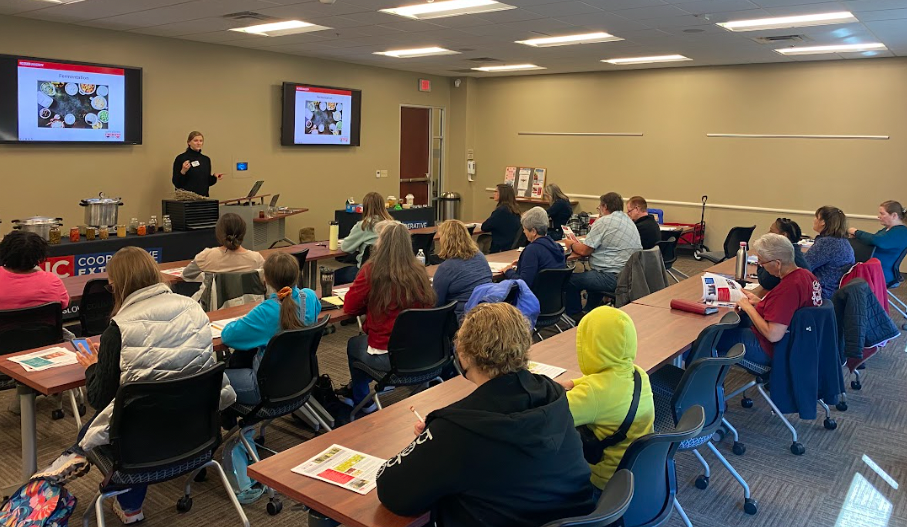
In response to a growing interest in sustainable living and self-sufficiency within the community, N.C. Cooperative Extension, Onslow County Center offered a class series called "Back to Basics: Backyard Food Production." The series consisted of three classes designed to empower community members with the knowledge and skills needed to produce their own food. The first session focused on raising backyard livestock, the second session covered growing produce, and the third session delved into the science of preserving harvested produce.
The first class, Raising Backyard Livestock, led by the livestock Agent, Melissa Huffman, provided participants with practical knowledge on raising backyard livestock. From selecting appropriate species of livestock based on area, fencing and forage options, attendees gained insights into integrating livestock.
The second class, led by Emilee Morrison & Lisa Rayburn, was dedicated to empowering community members with the skills to grow their own produce. Participants learned the fundamentals of soil preparation, seed selection, and sustainable gardening practices.
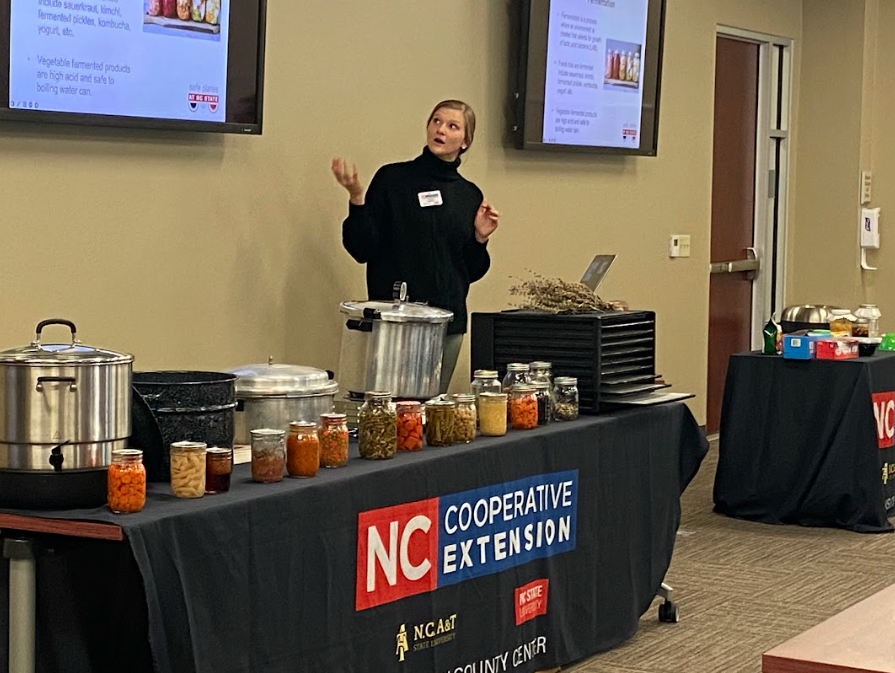
The last class was a food preservation-focused class led by Family & Consumer Sciences Agents Sarah Ware & Jessica Gardener. Attendees learned research-based preservation techniques, including canning, freezing, and drying.
The "Back to Basics: Backyard Food Production" was well received by members of the community. A total of 45 individuals participated in the series with an average of 20 attending each class. Each session received positive feedback, with participants reported learning gains on the various topics. Based on survey feedback, 100% of participants expressed that they were “satisfied” to “very satisfied” with the information presented. The evaluation showed all participants' knowledge was increased in all three classes. Additionally, many participants requested additional training on these and other related topics, which shows the need for this type of programming. That data is being used to guide our programming efforts in the upcoming year. This series stands as an example of how targeted education can inspire positive change, fostering a community that is not only self-sufficient but also connected through a shared commitment to sustainable living.